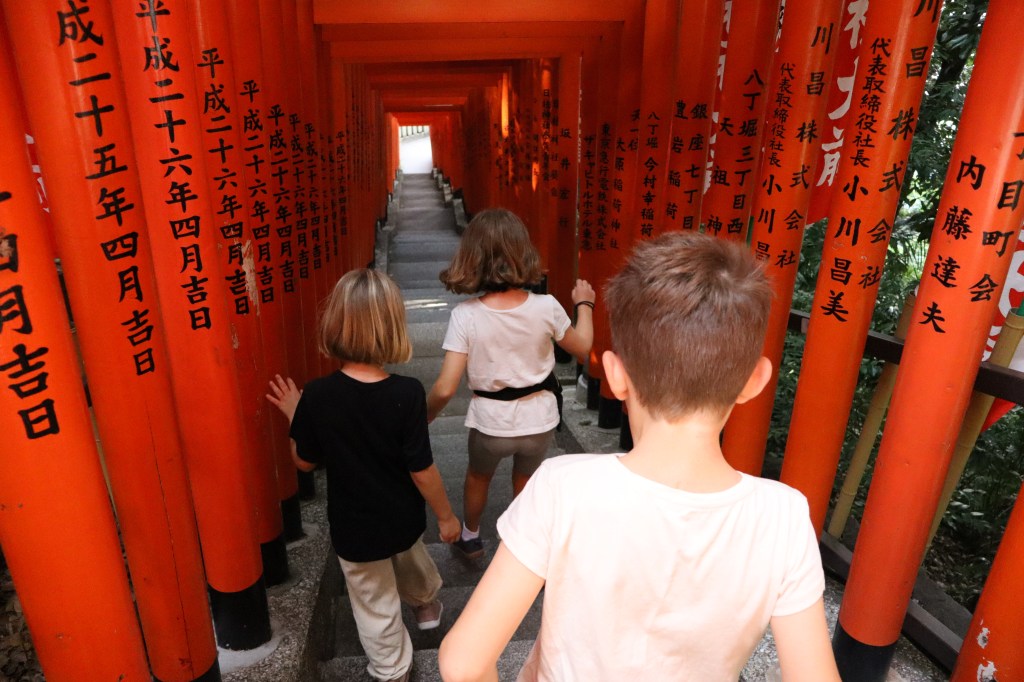
What is there even to say about an entire country in one blog post? Japan was the first stop on our journey around the world, and a perfect introduction to 3+ months traveling in Asia. A blend of East and West, old and new. Efficient public transportation and toilets where you can flush the paper, interspersed with vending machines on every corner and a temple or shrine in every neighborhood. When I think about what to share about our whirlwind week in Osaka, Kyoto and Tokyo a few things come to mind.
First, we learned some things about ourselves as long-term travelers. Second, while we only visited major cities, we were able to make some observations about the culture. And finally, a few highlights from our time in Osaka, Kyoto and Tokyo.
Figuring out how to travel
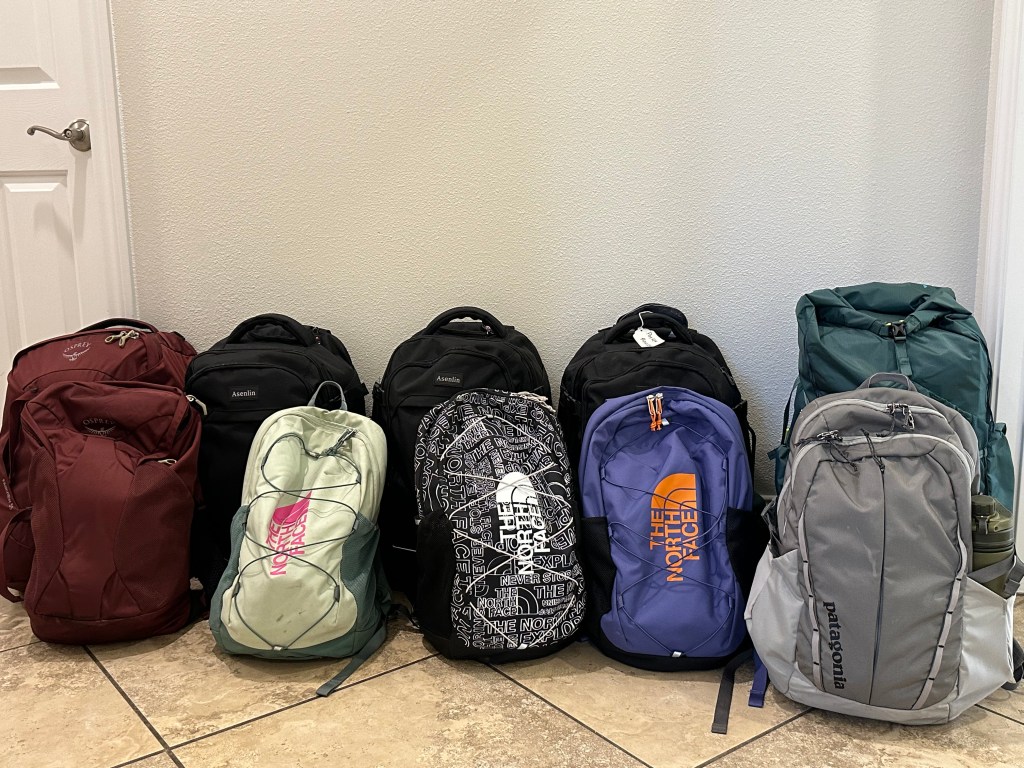
A few weeks ago, we boarded a plane at LAS with only our carry-on bags and our backpacks. Armed with only the essentials, we were going minimal. Planning to take all forms of transportation, we were (and are) determined to be able to carry everything on our backs/in our arms. We’re currently carrying ten-ish outfits, some additional warm weather stuff for when we visit cold weather and three pairs of shoes each. We also have some small toiletries, a first aid kit, a set of resistance bands, a camera, our laptops/iPads/kindles and a few things for entertainment for the kids (some moldable beeswax, drawing supplies, and a pencil pouch full of legos).
Since our family has spent the last ten years avoiding screen time like the plague, it’s been a big adjustment for the kids to use iPads to read books, continue with some schooling and stay in touch with their friends and family. Setting their devices up with the proper content and controls WAS A WHOLE THING. They’re still only allowed to use them to read books, spend a little time on Khan Academy reviewing math and grammar, FaceTime with people back home or send emails (except on travel days), but I’m still struggling with seeing them on a screen instead of with a book in their hands.
Before we left, I was often asked what the kids would do with their time while we stayed in AirBnB for long periods of time. Well, don’t worry guys. They’re not bored. (shhh… don’t tell them I used that word.) They are stretching their imaginations, growing their creative muscles, and getting lots of family time and engagement with Mom and Dad.
Now that I’ve gone down that rabbit hole, I’m finally getting to the point about what we learned. Even with minimal luggage, traveling from city to city every 2-3 days with all this stuff… just did not work well for me. The unpacking and then re-packing, lugging heavy bags in hot weather, and managing the timing of the laundry with no dryers…. So, lesson 1: think hard about choosing to visit somewhere for less than a week.
As someone who grew up in Alaska, moved to Las Vegas as a teen, and threw 6 years in Boston in the mix…I thought I wouldn’t really be bothered by the weather. I didn’t actually even check the weather for the places we were visiting… whatever it would be, it would be. And I don’t mind the idea of being a little physically uncomfortable, it’s good for building character. Or so I thought. Buy guys, nothing can describe the feeling of walking through the biggest city in the world when it’s 99 degrees outside with 51 percent humidity. It resulted in lots of late night research to uncover new indoor activities, and many hours sitting inside coffee shops or tea rooms just to avoid melting. Lesson #2, plan around the weather.
Next, I am just not a city girl. While Tokyo and Osaka were beautiful and amazing and convenient and walkable, they were A LOT. Holding on to the children so they don’t get swept into the crowd, rushing to meet the next train… just not my jam. Kyoto on the other hand – while still a huge city – felt totally different. Nature only half an hour away by train, one story buildings, huge parks and streams and trees… much more my speed. We spent the beginning of our trip in some of the biggest cities in the world, and I’m happy there are more rural experiences in our future. Our family is split on this, so we’ll have to find the right balance of both. Lesson #3, every city needs to be followed with a little country.
Finally, we’ve had to remind ourselves over and over again… this is not a vacation. When we’re tempted to book more plans and indulge in another sweet treat, we have to remember that this is our real life for the next year and we need to create sustainable habits. Yes, we want to see some sights. We want to have special and exciting days. But we want those to be the exception, not the rule. We want to be more excited about the people and the places and less excited about the experiences.
Japanese living and culture
It seems to me it would take a lifetime to understand the culture of this beautiful country. Some of our experiences were expected based on our research and reading, and some were a total surprise. Of course Japan is made up of millions of individuals with their own families and history, but there are some observations about the shared experience that stand out.
First things first… the Japanese know how to do transportation. Even in the busiest areas of town, full of tall skyscrapers and apartments and restaurants, there’s zero traffic congestion or noise. Prior to visiting, I was overwhelmed by all of the private train and subway operators that require separate tickets and passes. But the signage is clear, the stations are everywhere, and it’s all designed in a way that just makes sense. Commuters bustle around on a top notch network of subways and trains, which operate seamlessly. Schedules are predictable and on time. And many stations are connected by a maze of underground, air conditioned walkways that are more like shopping malls. No need to make an extra stop at the grocery store, there’s like one already at your subway stop. It’s not unusual to walk everywhere, and many neighborhoods are designed only for bikes and pedestrians.
Also…the toilets. I thought I appreciated the Japanese toilets when we were there. Heated seats, bidets, a little music. But after two weeks in Southeast Asia, now I really appreciate those toilets. And guys, why hasn’t the whole world figured out to put a handwashing sink in the back of the toilet and then use the water for flushing? Seems like it would have caught on.
Function is the word that primarily comes to mind when I think about daily life. Things are so well planned and executed, and everything has its purpose, for which it works perfectly. One example of this is dining out: there are ramen restaurants and sushi restaurants and soba restaurants and udon restaurants, and izakayas, but you won’t find a bowl of soup in a sushi restaurant. Every restaurant has a purpose, and it’s perfectly executed. Food is hot and fast, and we didn’t have a bad meal outside of the airport.
You also don’t see a lot of multi-tasking going on. People are dedicated to the task they’re at. Rarely do you see someone walking through the subway stations looking down at their phones or with their air pods in. In the same vein, I was shocked at watching teenagers and young adults sitting on the train… doing absolutely nothing. Not reading, or scrolling or talking. The Japanese know a little something about sitting in the quiet. Something we could probably use a little more of in America.
Oh, and PSA: the paper straws from Starbucks don’t get soggy or soft; people are paid a living wage, so they don’t rely on tips to make ends meet; I never once saw a piece of garbage where it didn’t belong.
Travel highlights
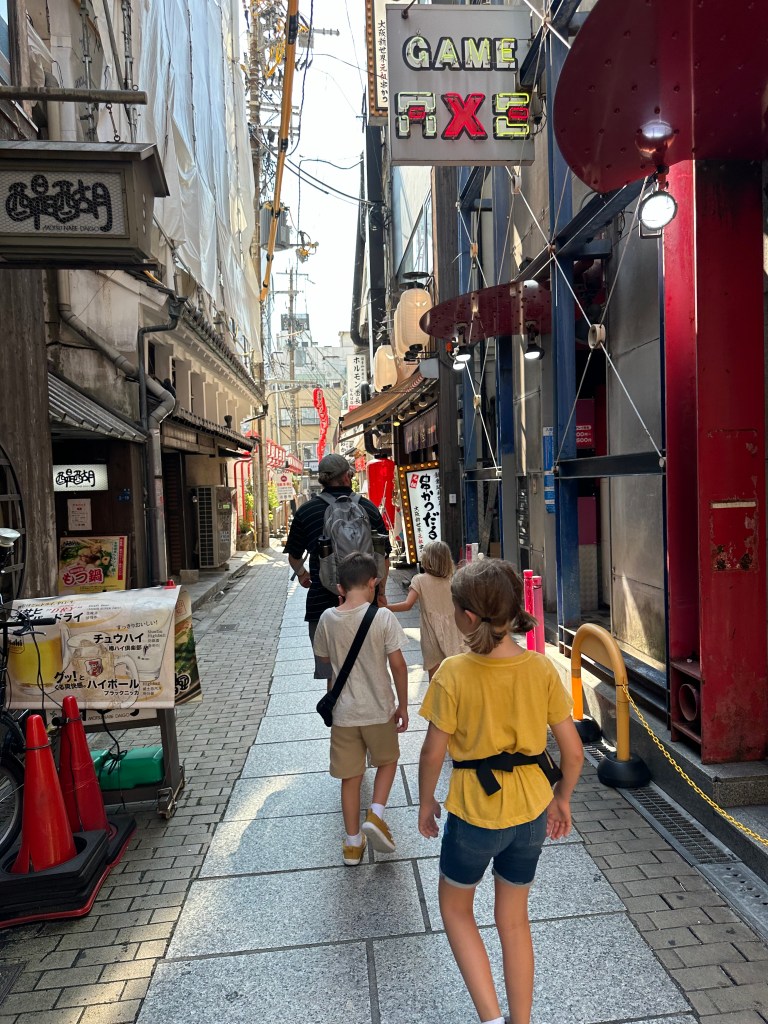
When planning our time in Japan, I quickly became overwhelmed. All of the to-do lists told us to book tickets to top attractions by staying up till 3 AM exactly 60 days before, and most blogs I read recommended the same assortment of 25 “must-see” attractions. The thing was, our family just isn’t excited about shelling out big bucks to participate in the newest, coolest thing. So we decided to spend a lot more time wandering and a lot less time making plans. We spent hours wandering through the covered shopping arcades, taking in the sights and smells (and snacks). We ogled at all of the architecture, and stepped inside for a blast of AC whenever we could. And we focused on beauty and history over modern and popular. This turned out to be the right idea for us.
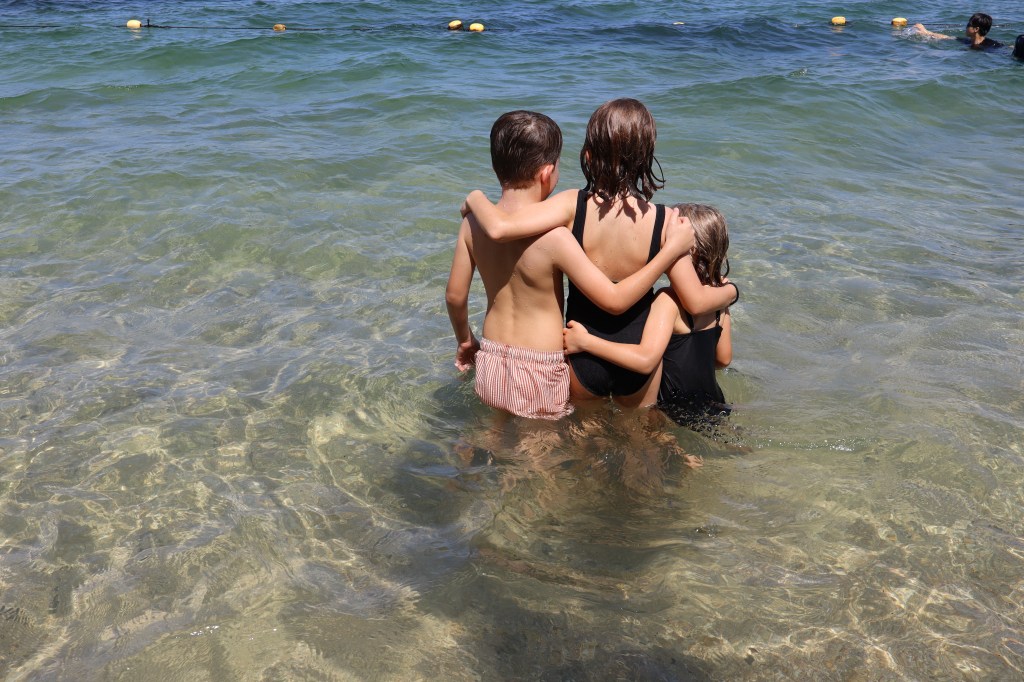
After a couple of days in Osaka, we decided to escape the heat and the city life in favor of an afternoon by Lake Biwa. It was just what the doctor ordered. An hour on the train and a 10-minute walk, and we were dipping our toes in crystal clear lake water that was at least 85 degrees. Was it so warm because of pollution and runoff? I don’t even care. We spent a glorious few hours splashing in the waves, under the shade of pine trees that lined the banks, and ended it with some spectacular shaved ice. In true Japanese fashion, even the bugs were unassuming and bit up our legs without ever making their presence known.
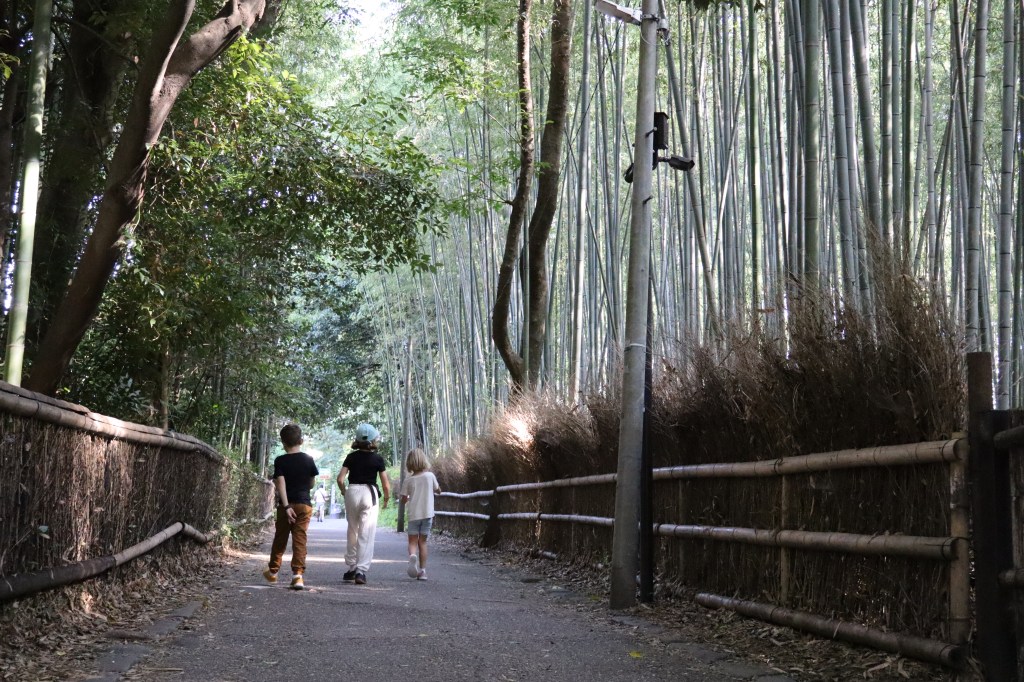
The next morning we ventured outside again, this time to a more popular tourist destination outside of Kyoto. The Arashiyama bamboo forest. We got there early to beat the crowds, which was so worth it. We got to wander around for several hours, visiting shrines and temples and even came across a gorgeous lotus pond. The kids felt the sadness and heaviness of the idol worship, and we spent some time praying for the people who worship there to see the truth of the one true God. Later that evening we stumbled across a beautiful park with a stream as we were wandering after dinner… It seems like behind every skyscraper is a new world waiting to be discovered.
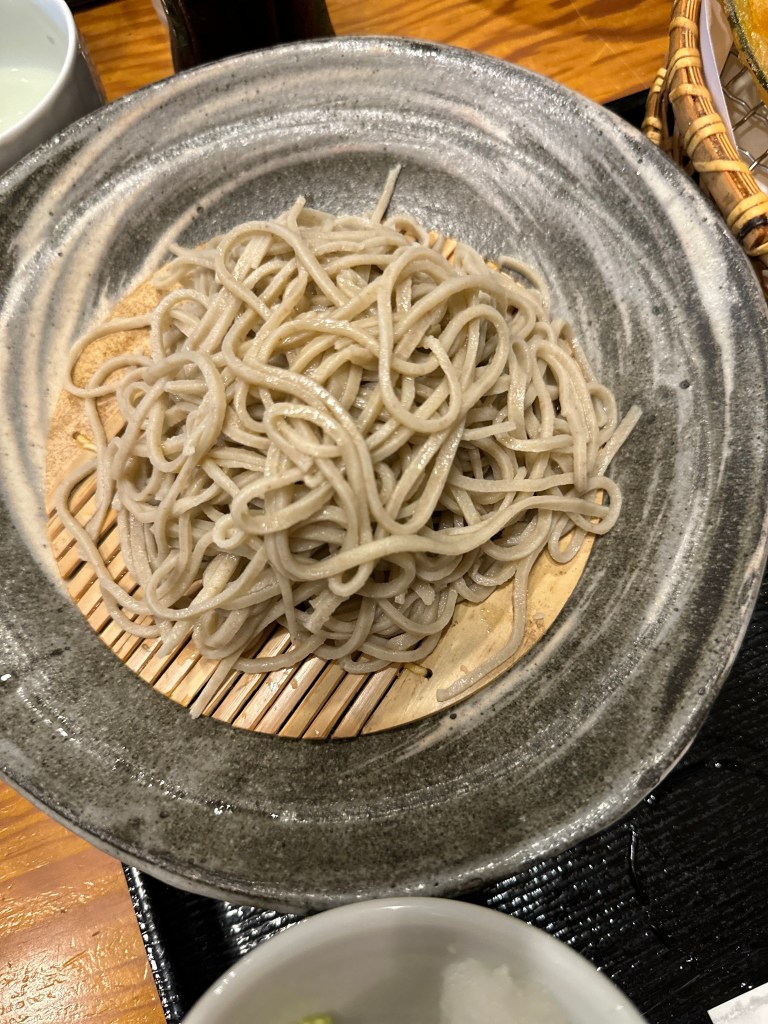
Another highlight was our visit to Mustard Seed Church in Kyoto. WOW. How beautiful to experience a bilingual worship service, with singing and a powerful message spoken alternately in English and Japanese. The believers were so kind and gracious to welcome us to their church. We asked one of the members for a lunch recommendation, which brought us to an amazing noodle shop where the cooks were making udon by the gallon right before our eyes. They were so kind and helpful and understanding over our lack of ability to speak or read Japanese, and thankfully a local man helped translate for us.
For me, probably the biggest highlight of our time in Japan was not even Japan-specific. After nine-years of having to completely avoid gluten, Big Pea discovered she could eat whatever she wanted with no adverse reactions. While she doesn’t have celiac, gluten has always caused her a myriad of negative symptoms, and we’ve built our habits around making sure she has food available that she needs. We had heard that many people with similar symptoms visit Japan and can handle the food just fine, so on our second day there she dove right in. After four days of slowing trying different gluten-filled foods, she finally dove in. I sat across the table from her as she squealed in delight over having her first “real” hamburger bun, and the rest is history. Can you understand the freedom of being able to walk into any restaurant off the street after a lifetime of careful planning and preparation? It’s a weight lifted. Being spontaneous with our dining out was definitely a highlight.
On our final full day in Tokyo, we were in a hotel with no kitchen available, and the convenience store just wasn’t gonna work for another breakfast. While we’d enjoyed the delights of the local conbini, one can only eat so many chicken tonkatsu sandwiches in a week. We ventured to the other side of the city to have an American style breakfast at The Morning Folks. Even though it took an hour to get there, the awesome organic vegetables and chatting with the owner and staff made it so worth it. Afterwards we visited a local “water park,” which was a beautiful artificial stream where the kids swam and played for hours while the parents sat and talked and read. I see many more days like this in our future.
Our time in Japan was beautiful and meaningful and I am so grateful for it. I am especially grateful to have a husband with all of the folders and spreadsheets and budget tracking skills, allowing me to be the chief wanderer and fun-maker of our adventure.
 Peapod on Purpose